The Pocket’s Journey from Hidden Detail to Design Feature
The history of pockets reveals how hidden storage and visible pocket shapes affect a garment’s line, construction and sense of purpose.
A pocket’s history is less a straight march from hidden pouch to sewn-on feature than a record of different ways to carry things. In many garments, storage was once supplied by a separate bag worn beneath clothing; later designs also placed pockets within seams, linings or the outer cloth itself. The distinction matters because each solution changes what the wearer can reach and what the garment shows.
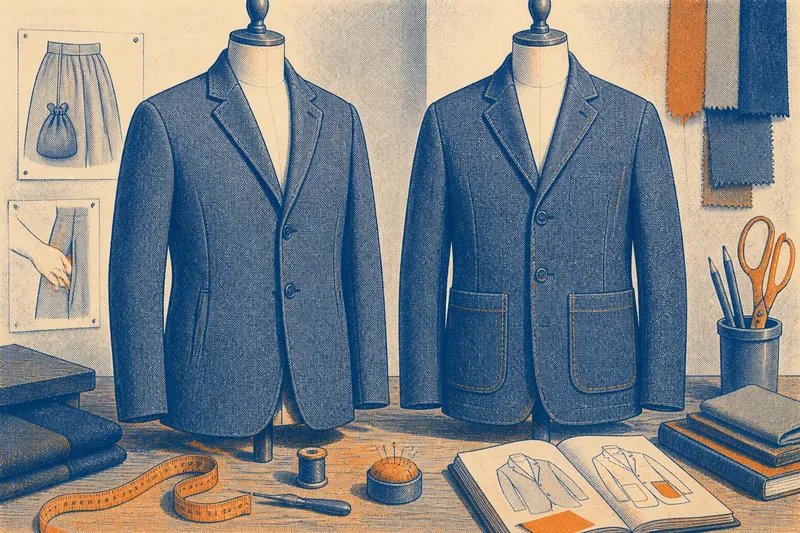
Imagine a fictional costume studio preparing two plain wool jackets for an exhibition. The maker gives one a discreet seam pocket and the other a pair of visible patch pockets, keeping the basic shape and cloth alike. The comparison makes a useful point: a pocket’s construction can alter a garment’s appearance without changing its overall silhouette.
How did hidden pockets work?
In some historical dress, the pocket was a separate pouch tied around the waist rather than a bag sewn into a garment. Openings in a skirt or outer layer let the wearer reach it while the pouch remained concealed beneath the visible clothes. This arrangement is documented for particular kinds of dress, not a universal account of how everyone carried belongings.
The clothing had to allow access without exposing the contents. An opening at a side seam or in an overlapping layer could serve that purpose, while folds and outer fabric kept the pouch out of sight. The result separated the visible outfit from the practical storage beneath it.
For the studio’s first jacket, the maker chooses a pocket opening set into a side seam. It is a present-day design choice inspired by concealed storage, not a reconstruction of a particular historical garment. The front stays visually quiet, though the pocket still forms part of the jacket’s construction.
When did pockets become part of garments?
There is no single date when pockets became part of clothing. Separate pouches and pockets made within garments have coexisted in different forms, and the timing varies by garment, place and period. It is more accurate to describe a change in construction than to claim that one arrangement simply replaced another.
A sewn-in pocket typically has an opening and a pocket bag attached to the garment or its lining. It may sit within a seam, behind a welt or flap, or in a cut made through the outer fabric. Each method asks the maker to balance access, the strength of the surrounding cloth and the line of the garment.
A pocket bag also occupies space behind the opening. Depending on its placement and the garment’s cut, it may affect how the fabric hangs or feel against the body. That is why a maker might place it in a lining, adjust its shape or keep it away from a prominent panel—not merely for the sake of formality.
How do visible pockets change a garment?
A pocket becomes a visible design feature when its shape, position or finish is part of the garment’s surface. A patch pocket is attached on top of the cloth, leaving its outline in view. Flaps, contrast stitching and distinctive placement can make other constructions more noticeable too.
Visible pockets contribute lines and shapes to a garment. A pair of patches can organise the front of a jacket; a single pocket can add a detail to a shirt. These effects depend on the pocket’s scale and position as well as the rest of the design.
For the second studio jacket, the maker adds two patch pockets in matching wool and leaves the topstitching visible. The jacket now reads as more practical and informal than its companion, though it remains the same basic garment. That is an invented comparison, not evidence that patch pockets always carry one meaning.
What do different pocket types look like?
Pocket names often describe construction or position. Recognising the differences helps explain how a pocket affects both access and the garment’s appearance.
- Seam pockets sit within a seam and can be difficult to see when empty. If the opening lies flat and is easy to locate, the pocket can preserve a quiet front; if it pulls or gapes, the seam may need a different placement or construction.
- Welt pockets have a narrow finished opening, sometimes framed by one or two strips of cloth. If the welt sits neatly against the garment, it keeps the detail restrained; if it draws attention, a less prominent position or finish is an alternative.
- Flap pockets cover an opening with a shaped piece of cloth. If the flap adds the intended visual edge, retain it; if it interrupts a clean line, a simpler opening is an alternative.
- Patch pockets are sewn onto the outside, making their shape and stitching visible. If that outline suits the garment’s design, it can remain exposed; if a quieter surface is wanted, an internal or seam pocket is an alternative.
- In-seam pockets in dresses and skirts are set into a side seam to keep storage discreet. If the seam hangs smoothly, the placement is working as intended; if the fabric pulls, moving or reshaping the pocket is an alternative.
- Welt pockets with flaps combine a finished opening with a covering flap. If the flap complements the garment’s lines, keep it visible; if it looks too emphatic, a simpler welt is an alternative.
These categories can overlap: a pocket may have a flap over a welt, for example. The useful comparison is not which type is best, but how its construction affects the garment’s outline and the wearer’s access.
What can a pocket tell you about a garment?
A pocket offers clues about design, but it is not a reliable label for a garment’s purpose. A pocket that looks deep may be shallow or decorative, while an inconspicuous opening can lead to a useful pocket bag. Appearance and capacity are related, but they are not the same thing.
Say the fictional studio begins with two matching wool jackets, one with a side-seam opening and the other with two patch pockets. The maker checks each jacket empty, then places a folded paper programme in each pocket. The seam pocket remains hard to see from the front, while the patch outlines stay visible; if the programme catches at the seam opening, the maker would choose a wider or differently placed opening, while the patch pocket needs no such change. The comparison shows how an actual object can reveal access and appearance, without pretending that either jacket represents a historical rule.
When examining a garment, look at the opening, its position and whether the pocket’s outline is visible from the front. Then notice the surrounding cloth: the pocket may interrupt a smooth panel, follow a seam or add a visible shape. Those observations are more useful than calling a garment simply “functional”.
Which pocket details answer common questions?
Why are some pockets sewn shut?
A pocket may be temporarily stitched closed to help the garment keep its shape during handling or display. Others are decorative rather than usable, so inspect the opening and construction before assuming the pocket works.
Why do some garments have fewer or smaller pockets?
Pocket provision varies with the garment’s cut, period, fashion and intended use. There is no single explanation for every item; the garment itself can show whether storage was included, concealed, reduced or omitted.
Can a visible pocket make a formal garment look casual?
It can shift the impression, particularly when a large patch or conspicuous stitching is prominent. Cloth, cut and placement also matter: a restrained welt on a tailored jacket presents differently from a broad patch on a soft overshirt.
What is not worth the effort when comparing pockets?
It is not useful to treat one pocket type as a fixed symbol of class, gender or occasion. Those interpretations depend on the garment and its setting; start with what can be seen and how the pocket is made.
What does the two-jacket comparison show?
The studio’s invented comparison shows two different design choices: the side-seam pocket keeps storage discreet, while patch pockets make it part of the jacket’s visible composition. Neither is inherently more elegant, useful or historically representative. Each answers a different question about what the maker wants the garment to show.
The history of pockets is not a simple progression from concealment to display. Separate pouches and pockets built into garments have served different clothing arrangements, while visible pockets have also been used as design details. The construction, rather than a neat historical dividing line, explains how storage meets the garment’s surface.
Next time you examine a coat, dress or jacket, check whether the pocket disappears into a seam, sits behind a welt or claims a patch of its own. That small detail can reveal how the maker balanced access with appearance—and the history of pockets is clearer when the construction, not just the outline, gets a look.