Choosing an Outfit for a Long Day Away from Home
Choosing an outfit for a long day away from home starts with its least flexible moment, helping you stay comfortable and appropriately dressed without packing a second wardrobe.
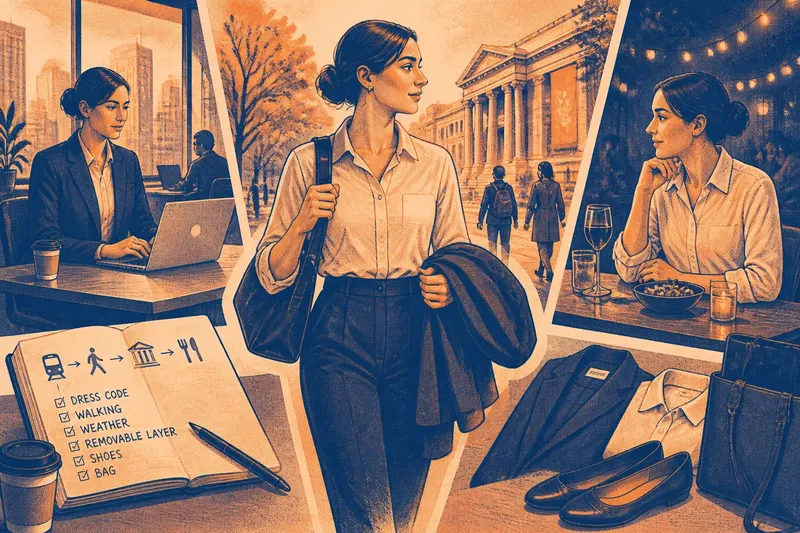
For choosing an outfit for a long day away from home, the awkward transition matters more than the first appointment. A morning meeting followed by a walk and an informal dinner calls for clothes that can shift between settings without demanding a full change in a café lavatory.
Start with the day’s least flexible condition: perhaps a dress code, a long stretch on foot or a cold journey home. Let that shape the outfit, then use one removable detail to soften or sharpen it elsewhere. The aim is not to make every garment work everywhere; clothes are not particularly cooperative by nature.
Which part of the day should shape the outfit?
Choose the setting with the clearest demand, rather than dressing for the first event by default. A formal appointment may set the level of polish, while a long walk may set the limits on shoes and layers. If those needs conflict, decide early whether a compact change is necessary.
Write the day as a sequence of places and activities: travelling, sitting, walking, waiting and eating. Note the conditions you cannot readily change, such as a venue’s dress expectations or an exposed walk between stations. Ignore remote possibilities; planning for every imaginable mishap produces a bag full of improbable solutions.
How should you choose the clothes?
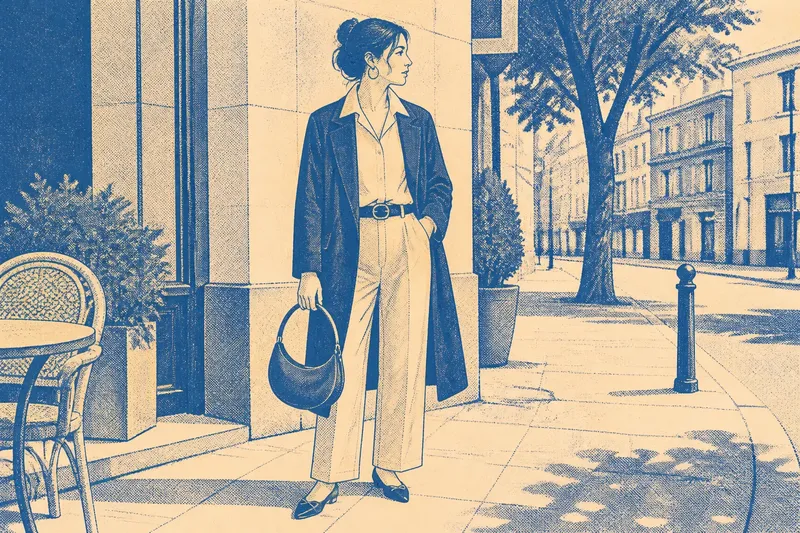
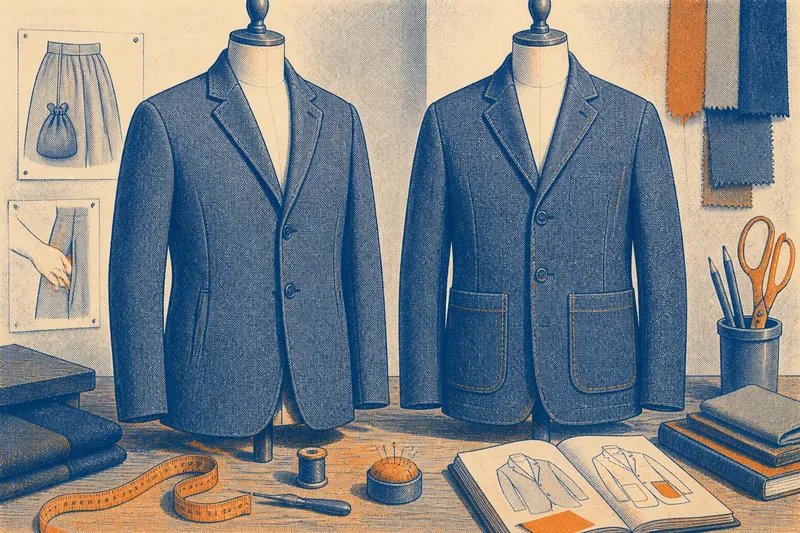
Begin with a piece that suits the most demanding setting and feels comfortable through ordinary movement. It could be tailored trousers, a simple dress, a soft blazer or a fine cardigan. Check that it lets you sit, reach and walk without pulling, shifting or needing constant attention.
Build around that piece with a coherent level of formality and layers you can remove. A shirt under a cardigan can look composed at a meeting and feel less restrictive on a journey. A blazer over a plain top can add polish, then come off when the setting relaxes.
Shoes deserve a decision based on the route as well as the room. Choose a familiar pair that suits the expected walking and the dress code; do not assign a stiff or untried pair a day of useful service simply because it looks persuasive in a mirror.
What small snags are worth solving?
- Check the shoes against the route: walk in the pair you plan to wear. If they rub or feel unstable, switch to a familiar pair suited to the day; if they feel secure, keep them and avoid packing a speculative spare.
- Check whether the layers regulate warmth: wear the base layer indoors and add the outer layer. If the combination feels stifling, replace the heavy layer with a lighter removable one; if it feels comfortable, keep the combination simple.
- Check fit while seated: sit and reach in the complete outfit. If a waistband, neckline or hem becomes distracting, change that garment or fastening; if it stays put, there is no need to add a belt or extra layer as insurance.
- Check how the bag sits: carry it over the coat or jacket you will actually wear. If the strap slips or presses on one shoulder, reduce the contents or choose a better-suited bag; if it stays comfortable, leave the spare bag at home.
- Check the outfit against each setting: compare its formality with the day’s clearest requirement. If one stop calls for a sharper look, add or remove one suitable layer; if the dress codes genuinely conflict, plan a compact change rather than pretending an accessory will settle it.
- Check the weather against the outer layer: try the coat over the outfit and check that the sleeves and shoulders remain comfortable. If it compresses the layers, choose a roomier coat; if it fits, carry only that outer layer.
Not worth the effort: choosing a separate accessory for every stop or carrying several backup layers without a specific reason. One adjustment tied to a real constraint is easier to manage than a portable wardrobe with its own administrative burden.
How can one outfit adapt to different settings?
Use a removable piece to change the tone while leaving the comfortable base alone. A blazer can make a plain top and trousers more formal; taking it off can suit a relaxed meal. This works best when the base outfit is already appropriate, rather than relying on accessories to disguise an obvious mismatch.
Say you have an appointment in a smart office, then plan to walk to a gallery and eat at an informal café. You start with dark trousers, a breathable shirt and familiar flat shoes; you add a soft blazer for the office. After the appointment, you remove the blazer and carry it over your arm. The resulting outfit is less formal but still tidy, while the shoes and base clothes remain suitable for the walk and meal. The trade-off is carrying the blazer briefly; if that feels cumbersome, a neat cardigan may be the better starting layer.
Before leaving, check the details that can become irritating in motion: whether a button pulls when you sit, whether the top stays tucked and whether you can reach your travel card without emptying the bag. Follow any venue dress guidance and the garment’s care label where relevant.
What questions come up when planning a long day?
Should I dress for the coldest part of the day?
Dress for the conditions you expect to spend time in, then use a removable layer for brief changes. A heavy layer that is comfortable outdoors may become tiresome in a heated room.
Can one pair of shoes work for work and walking?
Yes, if the shoes are already comfortable and suit the formality of the day. A familiar flat or low shoe may bridge the settings better than a stiff pair chosen only for appearance.
What if a dress code requires a change?
Work out whether a layer or small clothing change can meet the requirement. If the outfit itself must change, carry only the necessary item and keep the rest of the base outfit suitable for both settings.
How do I choose clothes when the day has conflicting demands?
Prioritise the clearest requirement, then consider a compact change if no single outfit can meet both demands. A blazer can adjust formality, but it cannot solve every genuine dress-code conflict.
What should you check before leaving?
Put on the complete outfit, including the coat and bag, and walk, sit and reach as the day requires. Notice any pull, slip or uncomfortable pressure, then change the specific item responsible. This is more useful than admiring the outfit while standing still.
- Check that the most formal or demanding stop is covered; if not, add a suitable layer or change the base outfit.
- Check that the shoes feel secure on a short walk; if they do not, choose a familiar alternative.
- Check that the layers work indoors and outdoors; if not, replace the heavy layer with a removable one.
- Check that the outfit stays comfortable while seated; if it does not, adjust the fit or fastening.
- Check that the bag sits comfortably over the actual outer layer; if it does not, reduce what you carry or switch bags.
- Check whether each extra item solves a named problem; if it does not, leave it behind, but carry a compact change if a real dress requirement calls for one.
Choosing an outfit for a long day away from home is ultimately a matter of matching clothes to the day’s actual constraints, not to a fantasy itinerary with perfect weather and endless patience. Keep the base comfortable, make one purposeful adjustment for the least flexible setting, and give your bag only the job it needs to do.